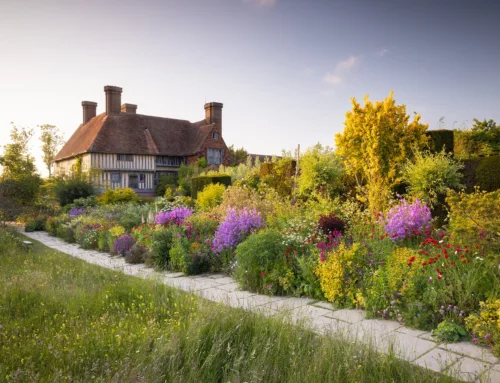
How to design an edible garden
Over recent years, I’ve had the immense privilege of working with Raymond Blanc in his gardens at Le Manoir aux Quat’Saisons in Oxfordshire. Raymond’s passion for plants and their uses is infectious – he’s curious. I value curiosity too but in today’s world we can be more risk‑averse and that dampens our willingness to try new things in the kitchen garden. This is why learning how to design an edible garden has become so important – it encourages creativity, resilience and a deeper connection with nature.
I’ll never forget visiting a large city primary school with beautifully maintained lawns but no trees, shrubs, hedgerows or planting at all. I urged the team to plant an orchard. The idea was dismissed over concerns about wasp stings. I do sympathise but learning to manage risk is essential to education otherwise, children may miss the pure joy of plucking a warm apple off a tree and discovering the art of foraging.
How to design an edible garden
Over recent years, I’ve had the immense privilege of working with Raymond Blanc in his gardens at Le Manoir aux Quat’Saisons in Oxfordshire. Raymond’s passion for plants and their uses is infectious – he’s curious. I value curiosity too but in today’s world we can be more risk‑averse and that dampens our willingness to try new things in the kitchen garden. This is why learning how to design an edible garden has become so important – it encourages creativity, resilience and a deeper connection with nature.
I’ll never forget visiting a large city primary school with beautifully maintained lawns but no trees, shrubs, hedgerows or planting at all. I urged the team to plant an orchard. The idea was dismissed over concerns about wasp stings. I do sympathise but learning to manage risk is essential to education otherwise, children may miss the pure joy of plucking a warm apple off a tree and discovering the art of foraging.

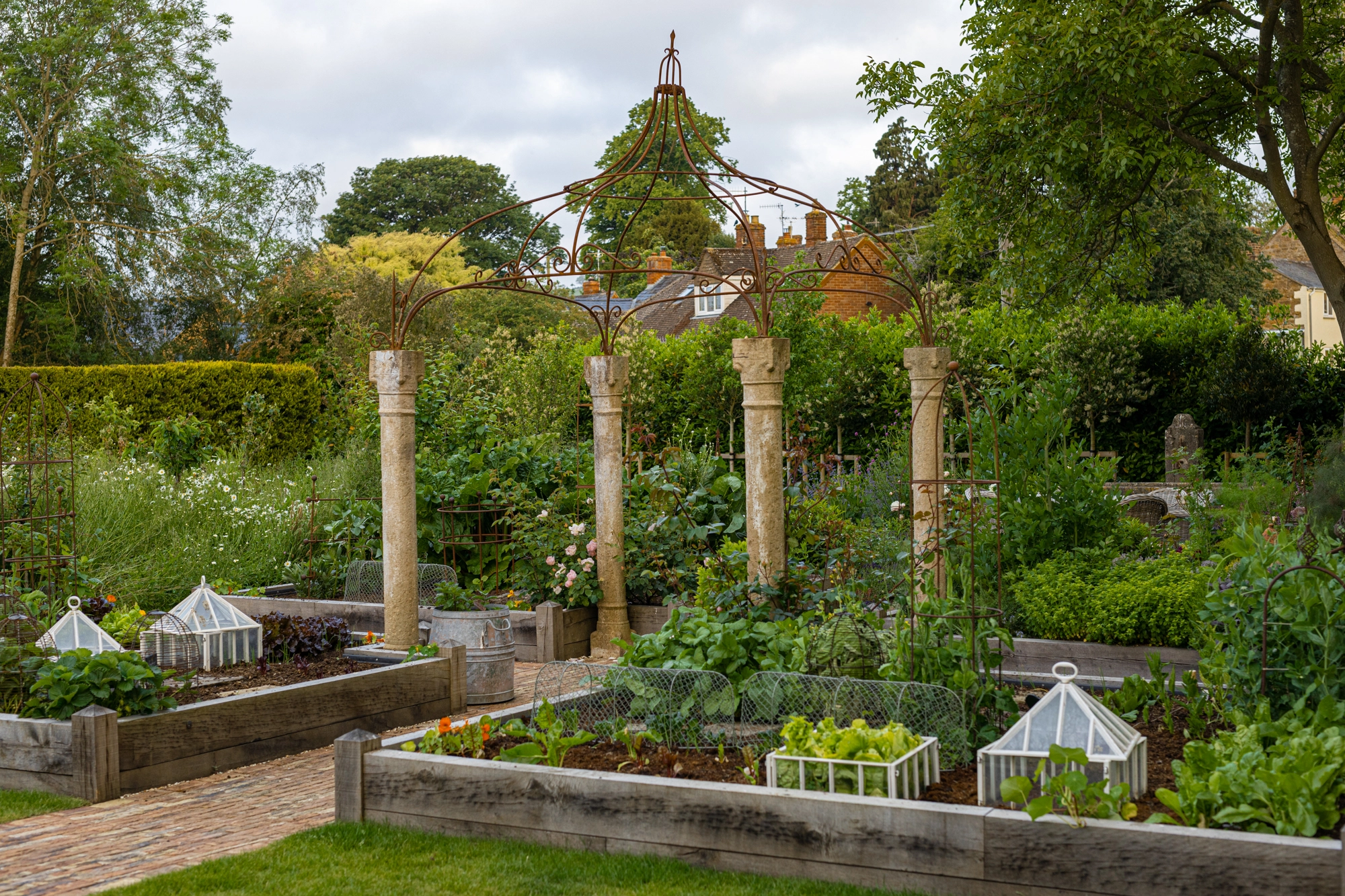
As time passes, I better understand the impacts of lockdown across society. Many are worrying but some brought hope. Working from home encouraged strategic thinking and better time management and, most importantly, it helped people re‑engage with their home gardens. The horticultural industry saw a surge as households valued outdoor spaces in a new way. For me, growing food at home offered resilience and joy. Britain is well served with supermarkets and farm shops but nothing compares to picking your own fruit, vegetables and herbs, and bringing them straight to the table.
I’m redesigning my outdoor space and, although I’ll keep space for flowers, I am a garden designer after all, the priority is to design an edible garden. On this chilly December day in the Cotswolds, I’m wondering just how far I can push this idea.
Fruit trees that already thrive here:
- Several apple trees, a plum, quince, prolific fig, mulberry and crab apple.
Herbs I love (and what I’ll add):
- Rosemary, parsley, sage, lovage, fennel and mint (prolific!).
- Adding winter savory and more.
- Lemon verbena for summer only – too tender for the Cotswolds winters.
My plot isn’t huge but careful, layered planting has created space for all these productive plants.
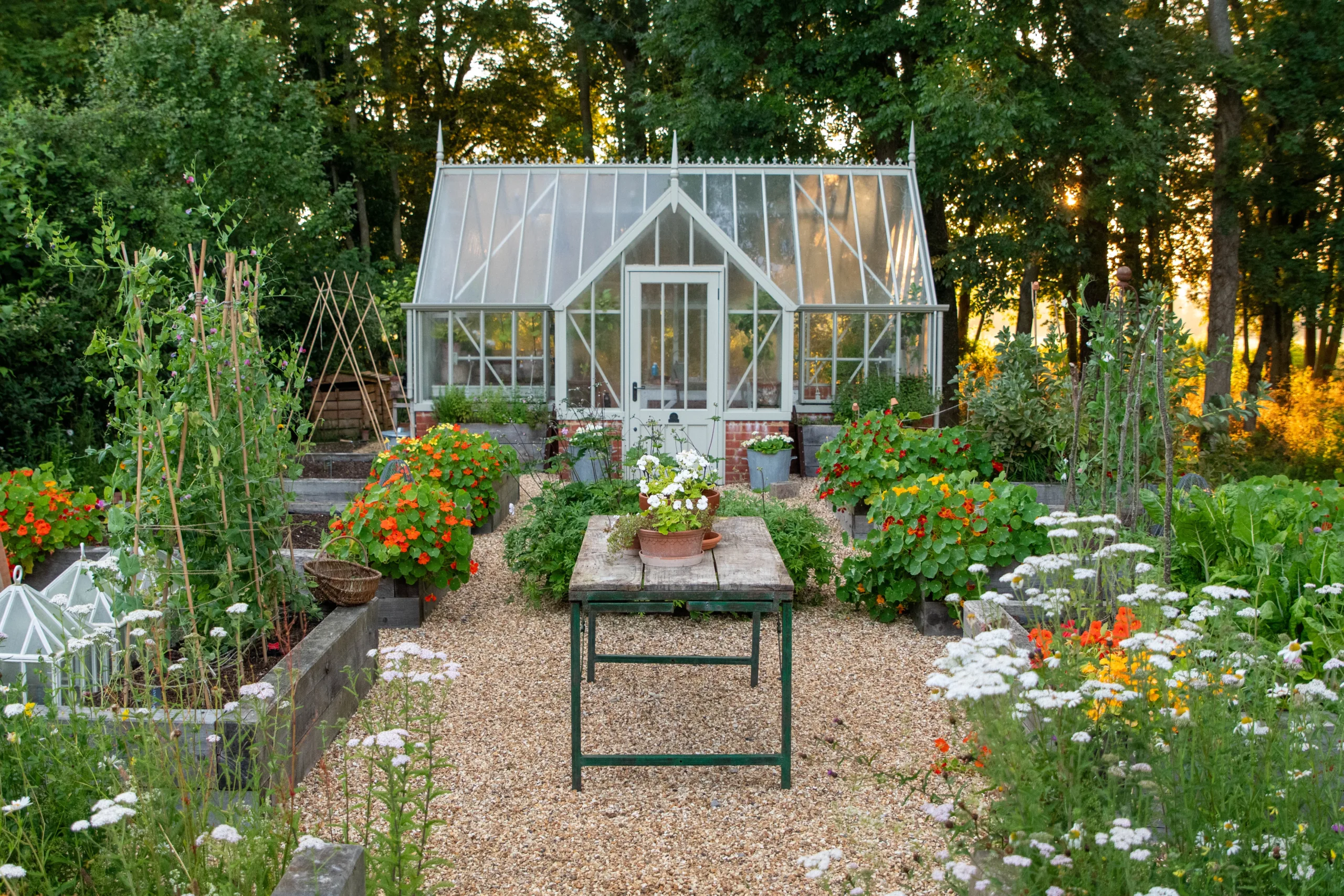
The lawn has gone. Turning turfs and breaking up dense roots to create vegetable beds was hard work but the rewards were exceptional: runner beans, carrots, onions and the largest beetroot I’ve ever grown. The pigeons claimed the mangetout; we’re currently negotiating over the kale.
Practical tip – crop rotation:
Rotate where possible to enrich the soil and break pest cycles. I grew carrots in three locations to keep carrot fly guessing – a simple tactic that genuinely helps.
I’m keen to develop less common edibles:
- Alpine strawberries tucked into wall crevices.
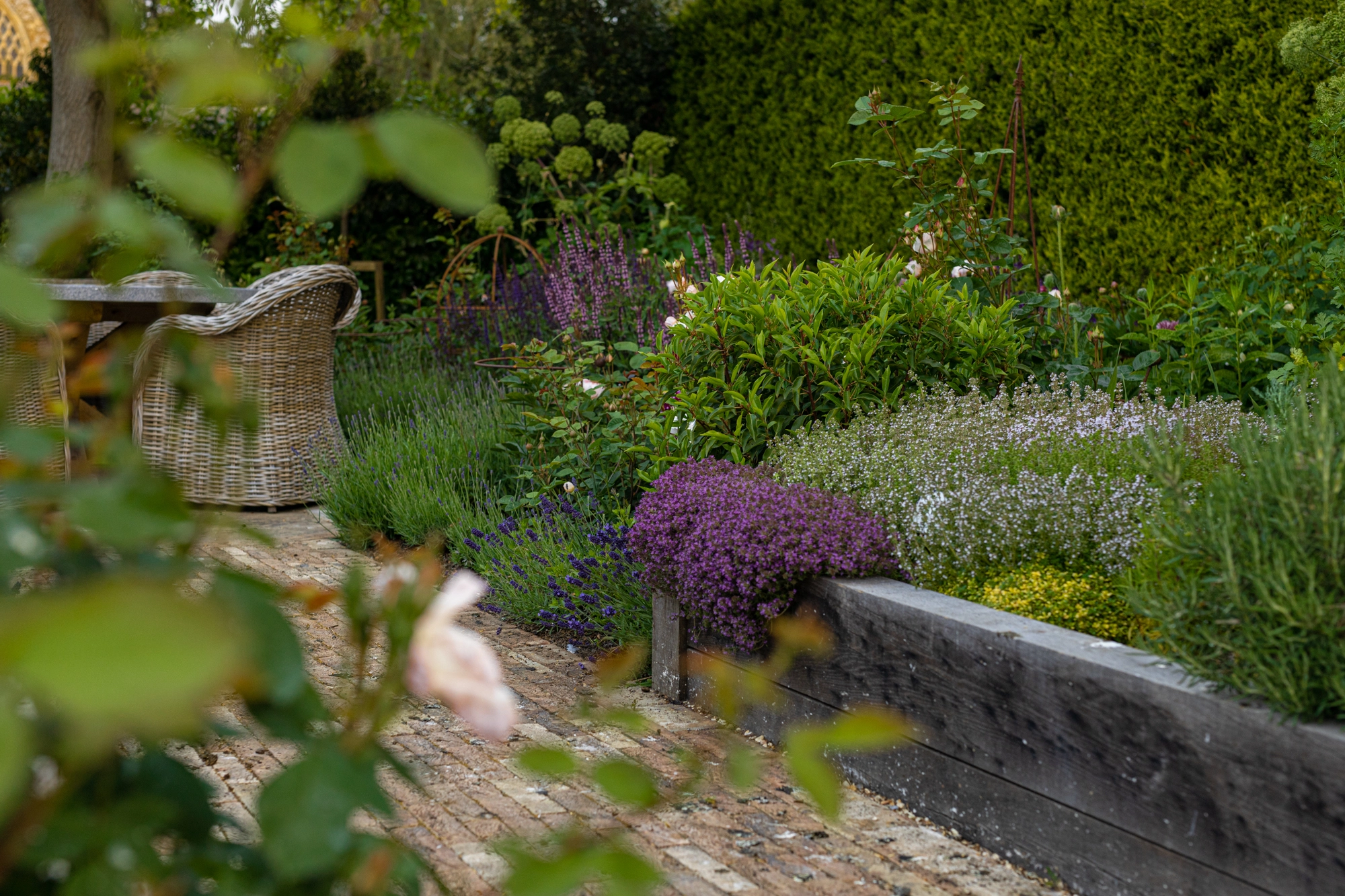
- Thyme and oregano in gravel paths for scent and easy harvesting.
- Angelica archangelica – a bold, architectural presence. It’s not for the faint‑hearted; it can make your garden feel delightfully Jurassic.
I need to screen an ugly close‑board fence and will use this as an opportunity to train raspberries, blackberries, tayberries and loganberries. A lattice framework will be beautiful and productive, ideal for Cotswolds and Oxfordshire plots that need structure.
I’ll plant rhubarb this winter – it sits comfortably among ornamentals, with architectural foliage that frames flower borders. I’d love to grow horseradish, though I’ve never had success striking it (despite its reputation for invasiveness).
On invasives: I have ground elder in enthusiastic quantities. If you have it, eat it – it’s delicious when young.
Nettles offer excellent habitat for caterpillars; hosting the occasional plant is a kindness to nature and the young leaves make a lovely, earthy pesto. Fat hen and chickweed are also delicious when cooked like spinach and, in my view, nicer.
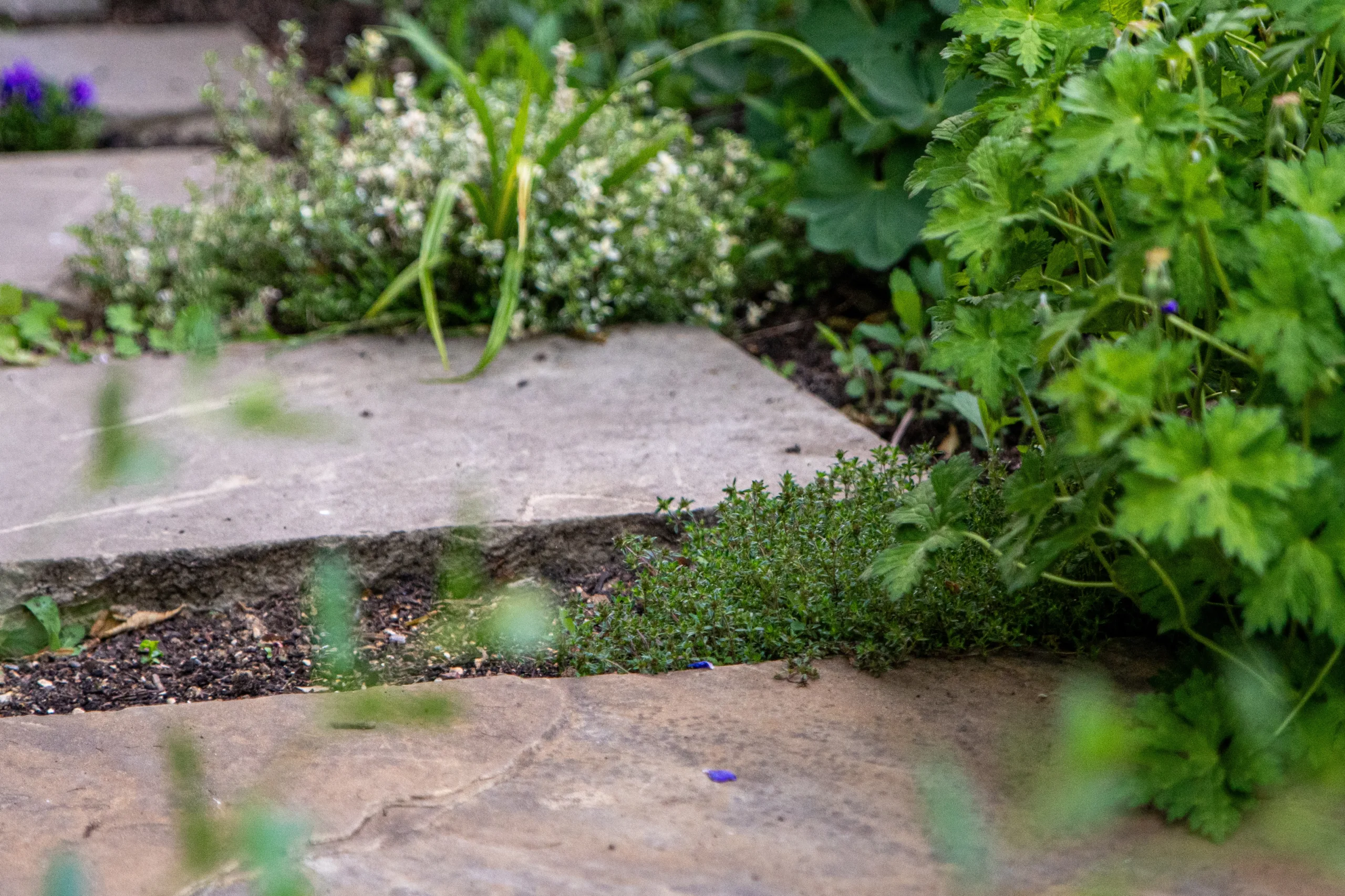
I haven’t got all the answers yet but I do know I’ll spend Christmas happily planning how to develop my edible garden. I hope to plant things I’ve never heard of before so 2026 brings both successes and failures, which for me offer equal joy.
From orchards to herb borders, trellis frameworks to wildlife‑friendly choices, Nicholsons can help you design, plant and maintain a beautiful, productive space in Oxfordshire, the Cotswolds and surrounding counties.
This blog was written by Liz Nicholson, Managing Director.
As time passes, I better understand the impacts of lockdown across society. Many are worrying but some brought hope. Working from home encouraged strategic thinking and better time management and, most importantly, it helped people re‑engage with their home gardens. The horticultural industry saw a surge as households valued outdoor spaces in a new way. For me, growing food at home offered resilience and joy. Britain is well served with supermarkets and farm shops but nothing compares to picking your own fruit, vegetables and herbs, and bringing them straight to the table.
I’m redesigning my outdoor space and, although I’ll keep space for flowers, I am a garden designer after all, the priority is to design an edible garden. On this chilly December day in the Cotswolds, I’m wondering just how far I can push this idea.
Fruit trees that already thrive here:
- Several apple trees, a plum, quince, prolific fig, mulberry and crab apple.
Herbs I love (and what I’ll add):
- Rosemary, parsley, sage, lovage, fennel and mint (prolific!).
- Adding winter savory and more.
- Lemon verbena for summer only – too tender for the Cotswolds winters.
My plot isn’t huge but careful, layered planting has created space for all these productive plants.
The lawn has gone. Turning turfs and breaking up dense roots to create vegetable beds was hard work but the rewards were exceptional: runner beans, carrots, onions and the largest beetroot I’ve ever grown. The pigeons claimed the mangetout; we’re currently negotiating over the kale.
Practical tip – crop rotation:
Rotate where possible to enrich the soil and break pest cycles. I grew carrots in three locations to keep carrot fly guessing – a simple tactic that genuinely helps.
I’m keen to develop less common edibles:
- Alpine strawberries tucked into wall crevices.
- Thyme and oregano in gravel paths for scent and easy harvesting.
- Angelica archangelica – a bold, architectural presence. It’s not for the faint‑hearted; it can make your garden feel delightfully Jurassic.
I need to screen an ugly close‑board fence and will use this as an opportunity to train raspberries, blackberries, tayberries and loganberries. A lattice framework will be beautiful and productive, ideal for Cotswolds and Oxfordshire plots that need structure.
I’ll plant rhubarb this winter – it sits comfortably among ornamentals, with architectural foliage that frames flower borders. I’d love to grow horseradish, though I’ve never had success striking it (despite its reputation for invasiveness).
On invasives: I have ground elder in enthusiastic quantities. If you have it, eat it – it’s delicious when young.
Nettles offer excellent habitat for caterpillars; hosting the occasional plant is a kindness to nature and the young leaves make a lovely, earthy pesto. Fat hen and chickweed are also delicious when cooked like spinach and, in my view, nicer.
I haven’t got all the answers yet but I do know I’ll spend Christmas happily planning how to develop my edible garden. I hope to plant things I’ve never heard of before so 2026 brings both successes and failures, which for me offer equal joy.
From orchards to herb borders, trellis frameworks to wildlife‑friendly choices, Nicholsons can help you design, plant and maintain a beautiful, productive space in Oxfordshire, the Cotswolds and surrounding counties.
This blog was written by Liz Nicholson, Managing Director.