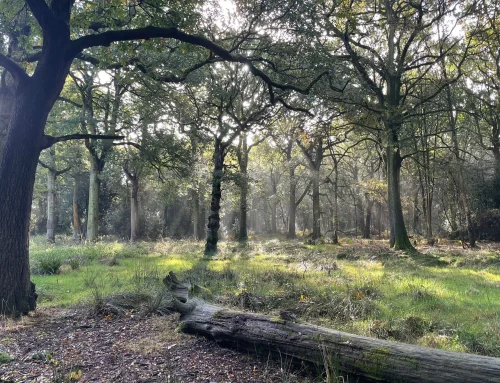
Kakamega Rainforest Biodiversity Project: One year of restoration and remarkable growth
A reflection from Nicholsons’ Managing Director, Liz Nicholson
It has now been one year since our first visit to our biodiversity project in the Kakamega Rainforest, Kenya. At the time, the idea of reducing the rampant spread of invasive guava trees and reintroducing pockets of indigenous forest felt bold – perhaps even unrealistic. Yet, returning in January 2026, the transformation we witnessed exceeded every expectation.
Returning to Kakamega: A year of hard work and hope
Our journey began in Kasumu, where we met our dedicated project leader and passionate Tree Specialist, Mark Nicholson (no relation). From there, Mark drove us deep into the Kakamega Rainforest – leaving the tarmac behind and navigating potholes that make Oxfordshire’s roads look like motorways!
We were returning to measure the growth achieved between January 2025 and January 2026, fully prepared for modest progress. Establishing young trees in a tropical rainforest, especially after clearing invasive species, is never easy.
But what we found left us genuinely overjoyed:
- Every single planted tree had survived.
- Many had grown substantially.
- A young forest was beginning to emerge.
Restoring rare indigenous species
One standout example is the Cordelia milenia, shown in the photograph below. Last year, this tree stood less than a metre tall. Today, it rises proudly, representing hope for a species becoming increasingly rare due to over-harvesting.
With naturally low germination rates, conserving this species is vital. Historically, its hard yet lightweight timber has been used for traditional tools, including yokes for oxen.
Saving it is more than ecological restoration – it supports local heritage and livelihoods.
Kakamega Rainforest Biodiversity Project: One year of restoration and remarkable growth
A reflection from Nicholsons’ Managing Director, Liz Nicholson
It has now been one year since our first visit to our biodiversity project in the Kakamega Rainforest, Kenya. At the time, the idea of reducing the rampant spread of invasive guava trees and reintroducing pockets of indigenous forest felt bold – perhaps even unrealistic. Yet, returning in January 2026, the transformation we witnessed exceeded every expectation.
Returning to Kakamega: A year of hard work and hope
Our journey began in Kasumu, where we met our dedicated project leader and passionate Tree Specialist, Mark Nicholson (no relation). From there, Mark drove us deep into the Kakamega Rainforest – leaving the tarmac behind and navigating potholes that make Oxfordshire’s roads look like motorways!
We were returning to measure the growth achieved between January 2025 and January 2026, fully prepared for modest progress. Establishing young trees in a tropical rainforest, especially after clearing invasive species, is never easy.
But what we found left us genuinely overjoyed:
- Every single planted tree had survived.
- Many had grown substantially.
- A young forest was beginning to emerge.
Restoring rare indigenous species
One standout example is the Cordelia milenia, shown in the photograph below. Last year, this tree stood less than a metre tall. Today, it rises proudly, representing hope for a species becoming increasingly rare due to over-harvesting.
With naturally low germination rates, conserving this species is vital. Historically, its hard yet lightweight timber has been used for traditional tools, including yokes for oxen.
Saving it is more than ecological restoration – it supports local heritage and livelihoods.

Three plots, three stages of recovery
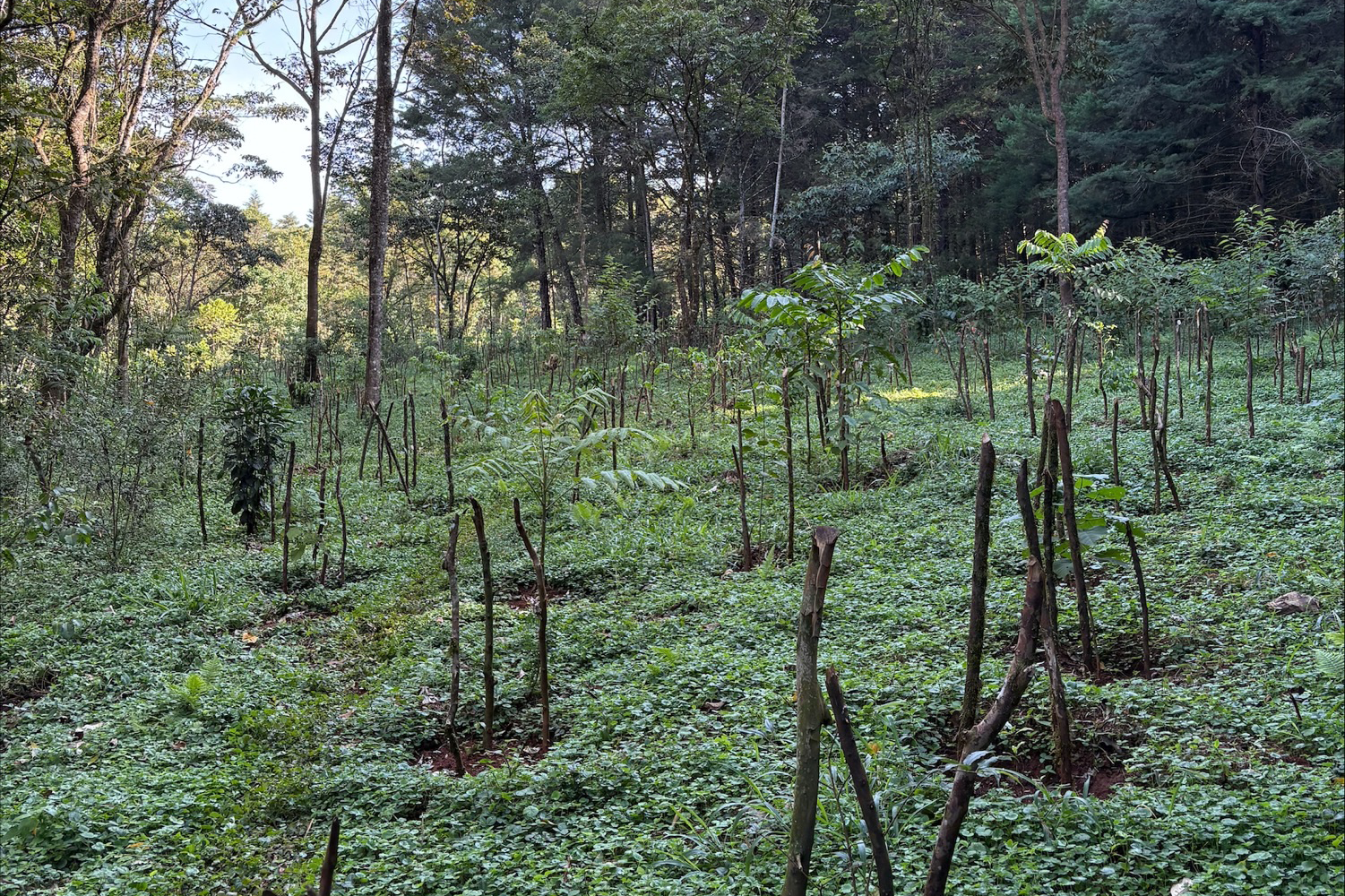
Our project now covers three primary restoration plots:
Plot One
The first area cleared of invasive guava. Today, its young indigenous trees stand tall – an inspiring sign of ecological recovery.
Plot Two
Planted early last year and showing healthy, steady growth.
Plot Three
A newly acquired site in agreement with the Kenyan Forest Service. When we first saw it, guava dominated the landscape. There was:
- No understory
- No herbaceous layer
- No shrubs
- No climbers
It was severely biodiversity‑depleted – a stark reminder of why this conservation work is so essential.
Restoration in challenging conditions
Because the Kakamega Rainforest is protected, chainsaws are prohibited. This means guava removal is carried out entirely by hand using machetes. The felled timber is repurposed for fencing to protect young trees from cattle.
The work is physically demanding in intense heat, yet the team – Mark, Cheryl, George, Eddie, Kevin and many others – persevere with unwavering passion.
Phyllis and Jane methodically remove young guava regrowth, which continues to reappear more persistently than expected. Meanwhile, others hand-scythe dense vegetation so young trees can be monitored during their first year.
All this is done with the knowledge that poisonous snakes are a real risk. Thankfully, “Snake Mary” – a well-known Kenyan expert – provides guidance and education on local snake species and their behaviour.
Three plots, three stages of recovery
Our project now covers three primary restoration plots:
Plot One
The first area cleared of invasive guava. Today, its young indigenous trees stand tall – an inspiring sign of ecological recovery.
Plot Two
Planted early last year and showing healthy, steady growth.
Plot Three
A newly acquired site in agreement with the Kenyan Forest Service. When we first saw it, guava dominated the landscape. There was:
- No understory
- No herbaceous layer
- No shrubs
- No climbers
It was severely biodiversity‑depleted – a stark reminder of why this conservation work is so essential.
Restoration in challenging conditions
Because the Kakamega Rainforest is protected, chainsaws are prohibited. This means guava removal is carried out entirely by hand using machetes. The felled timber is repurposed for fencing to protect young trees from cattle.
The work is physically demanding in intense heat, yet the team – Mark, Cheryl, George, Eddie, Kevin and many others – persevere with unwavering passion.
Phyllis and Jane methodically remove young guava regrowth, which continues to reappear more persistently than expected. Meanwhile, others hand-scythe dense vegetation so young trees can be monitored during their first year.
All this is done with the knowledge that poisonous snakes are a real risk. Thankfully, “Snake Mary” – a well-known Kenyan expert – provides guidance and education on local snake species and their behaviour.

Why this work matters
The Kakamega Rainforest is home to over 600 indigenous tree species, many of which are threatened. While parts of the forest are protected, large areas are overtaken by:
- Invasive guava
- Eucalyptus plantations
- Cypress plantations
Without intervention, biodiversity continues to decline.
A thriving, diverse canopy benefits:
- Local ecosystems
- Wildlife
- Local communities
- Long-term sustainable economic opportunities
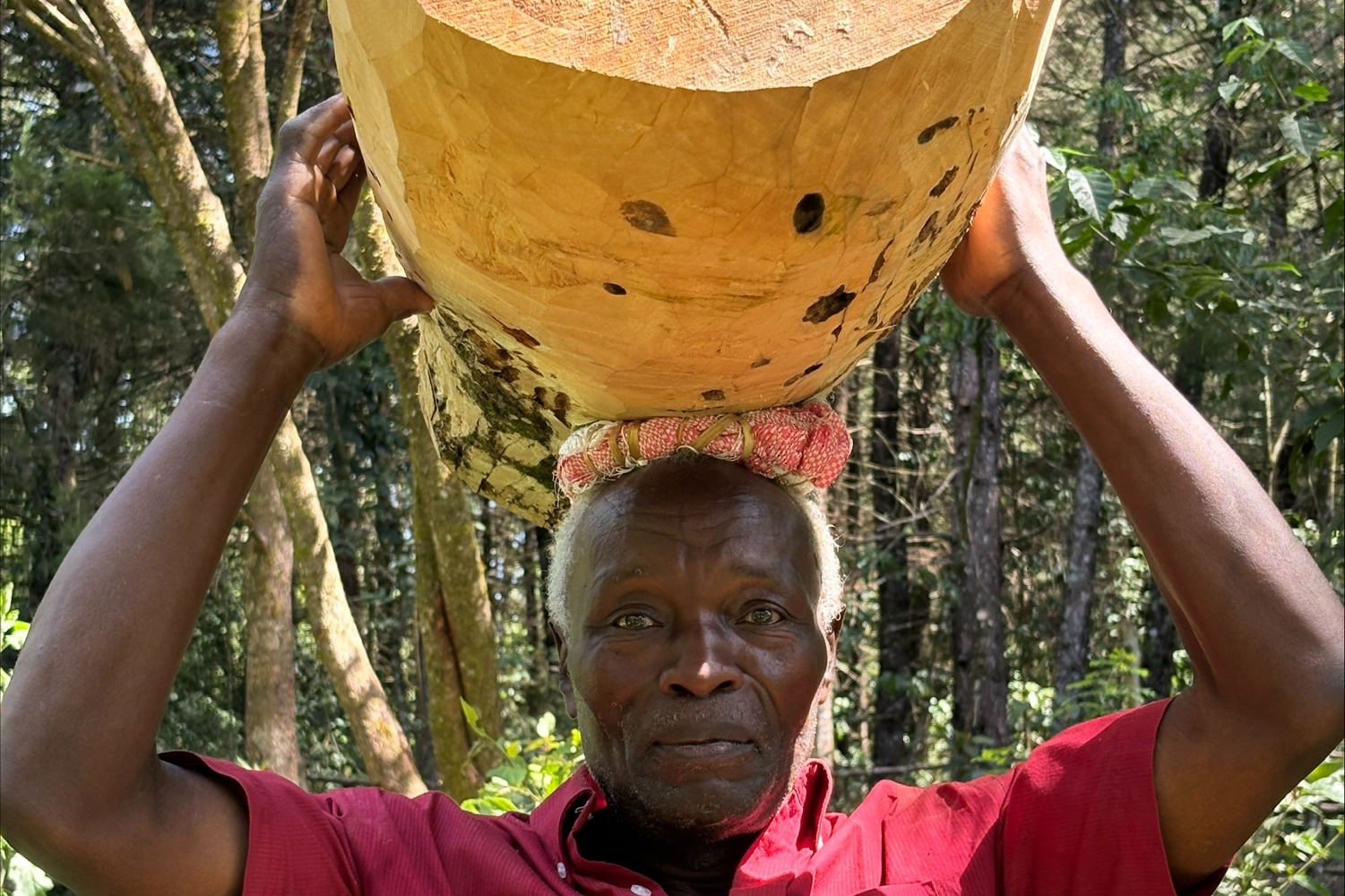
Currently, the only timber gathered legally is deadwood. Each day, women walk forest roads carrying up to 4-metre lengths of timber on their heads for the equivalent of $1.50. Sustainable forest management could provide safer, more equitable economic alternatives long-term.
Looking ahead
I don’t claim to understand every political or environmental complexity but I do believe deeply in a future where Kakamega can flourish under a continuous forest cover system – one that supports wildlife, biodiversity and sustainable human livelihoods for generations.
This project is proof of what is possible when commitment, community and conservation expertise come together.
Support our Kakamega Project
If you’re inspired by our progress and would like to support the next phase of restoration, we warmly welcome your involvement.
A single indigenous tree costs $10–$20 to grow and protect.
Every contribution, no matter the size, helps us do more.
Register your interest or make a donation here.
Together, we can continue restoring the Kakamega Rainforest, one tree at a time.
Asante sana.
Why this work matters
The Kakamega Rainforest is home to over 600 indigenous tree species, many of which are threatened. While parts of the forest are protected, large areas are overtaken by:
- Invasive guava
- Eucalyptus plantations
- Cypress plantations
Without intervention, biodiversity continues to decline.
A thriving, diverse canopy benefits:
- Local ecosystems
- Wildlife
- Local communities
- Long-term sustainable economic opportunities
Currently, the only timber gathered legally is deadwood. Each day, women walk forest roads carrying up to 4-metre lengths of timber on their heads for the equivalent of $1.50. Sustainable forest management could provide safer, more equitable economic alternatives long-term.
Looking ahead
I don’t claim to understand every political or environmental complexity but I do believe deeply in a future where Kakamega can flourish under a continuous forest cover system – one that supports wildlife, biodiversity and sustainable human livelihoods for generations.
This project is proof of what is possible when commitment, community and conservation expertise come together.
Support our Kakamega Project
If you’re inspired by our progress and would like to support the next phase of restoration, we warmly welcome your involvement.
A single indigenous tree costs $10–$20 to grow and protect.
Every contribution, no matter the size, helps us do more.
Register your interest or make a donation here.
Together, we can continue restoring the Kakamega Rainforest, one tree at a time.
Asante sana.