
March Gardening Tips
After a long, wet winter across Oxfordshire and the surrounding counties, our gardens will need a little extra care as the ground slowly dries out. With soil still saturated in many places, it’s important to avoid heavy work on borders and lawns to prevent long‑term damage.
But despite the lingering moisture, spring is officially here and the garden is already showing signs of life. Early bulbs, daffodils, tulips and other spring favourites, bring a welcome burst of colour, though the weather can remain unpredictable. Mild, sunny days may still be followed by sharp frosts so stay alert.
March is the ideal moment to complete any winter tasks you didn’t quite finish and get ahead before the busy growing season begins. And don’t forget – the clocks go forward at the end of the month, giving us lighter evenings and more time to enjoy our gardens.
1. Sow and plant sweet peas
Sweet peas are a classic feature in English country gardens and are perfectly suited to our local climate. In Oxfordshire, they can be sown or planted outdoors this month.
Some tips for success:
- Soak seeds overnight to soften the seed coat and improve germination.
- Plant two seeds every 30cm, around 1cm deep.
- Once germinated, remove or transplant the weaker seedling.
- Provide climbing support such as obelisks, canes or wires.
Rosara at Nicholsons stock a range of supports and obelisks or you can create your own using bamboo or willow.
2. Prune bush and shrub roses
If you didn’t prune last month, now is your final opportunity before growth accelerates.
How to prune effectively:
- Remove any dead, damaged or diseased wood.
- Cut away shoots that cross or rub together.
- Reduce remaining stems to one-third of their length, cutting to an outward-facing bud.
- Clear all prunings and dispose of them in garden waste.
- Finish with a generous mulch of well-rotted manure.
This encourages strong, healthy flowering growth throughout summer.


3. Weed rock gardens
Rock gardens often accumulate grass seeds and small weeds over winter. Fortunately, these are usually easy to remove.
Once cleared, top up with fresh gravel or decorative stone, replacing any that has washed away during the wet winter months.
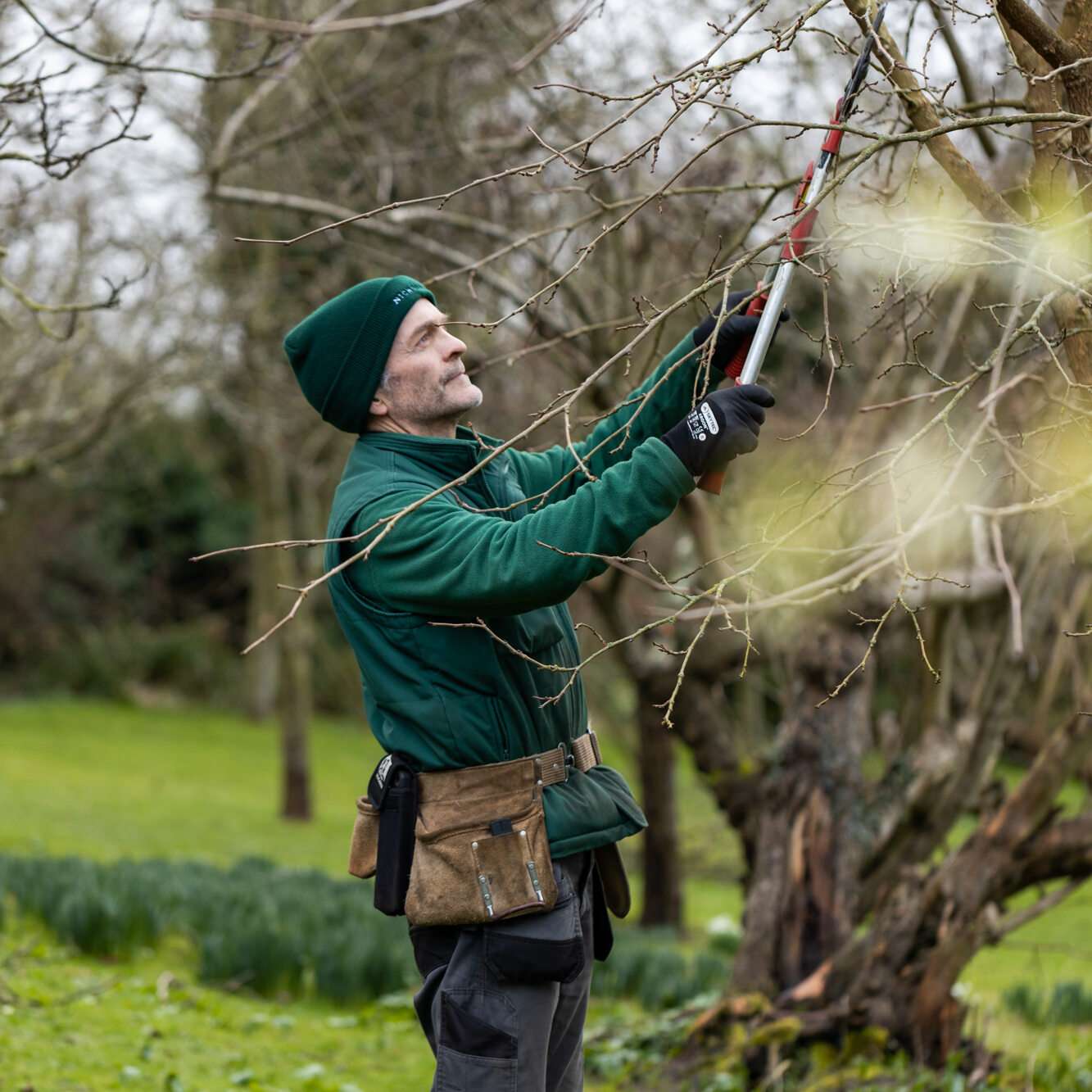
4. Prune dogwoods and willows
Dogwoods and willows are prized for their vivid winter stems. To maintain strong colour:
- Prune hard in spring, cutting back to one or two buds of last year’s growth.
- This encourages vigorous new shoots that will provide next winter’s colour.
5. Cut back overwintered growth
If you’ve left seedheads and stems for winter interest or wildlife, now is the time to tidy them.
After cutting back:
- Apply a balanced fertiliser.
- Cover beds with a layer of mulch to retain moisture and suppress weeds.


6. Protect young shoots from slugs and snails
Delphiniums, hostas and other tender perennials are particularly vulnerable.
We recommend organic control methods, such as nematodes.
For pots, a ring of copper tape provides an effective barrier to slugs and snails.
7. Plant early potatoes
Early varieties (new potatoes) are ideal for smaller gardens or container planting.
Why plant early potatoes now?
- They will be ready to harvest in around 12 weeks.
- They are perfect for pots, raised beds or small plots.
- Early crops free up space later for courgettes, beans or salad crops.
For reliability, choose varieties with the RHS Award of Garden Merit.
8. Plant summer-flowering bulbs
To ensure continuous colour throughout summer, begin planting bulbs such as lilies this month.
Planting tips:
- Choose a sunny, free‑draining spot.
- Plant to three times the bulb’s depth, spaced 7–10cm apart.
- For clay soils (common across our region), plant on a layer of grit to aid drainage.

9. Seed sowing (greenhouse or cold frame)
If you have protection, sow early varieties of:
- Cauliflower
- Broccoli
- Celery
In milder areas, you can sow directly; in colder spots, start under cover for earlier crops.
10. Lawn care for early spring
Grass will begin growing again now, meaning regular mowing is essential.
If you didn’t scarify in autumn:
- Remove dead grass and moss with a spring-tine rake.
- Apply a moss killer before scarifying to prevent spreading.
- Larger lawns benefit from an electric or petrol scarifier.
- Don’t be alarmed if the lawn looks worse immediately after – it will recover strongly.
Toward the end of the month:
- Apply a spring lawn feed.
- Reseed bare or thin patches.
Happy gardening!
With longer days and rising temperatures just around the corner, it’s the perfect moment to prepare your garden for the season ahead. If you’d like advice, plants or professional gardening support, the Nicholsons Garden Management team is here to help. Find out more information here.
March Gardening Tips
After a long, wet winter across Oxfordshire and the surrounding counties, our gardens will need a little extra care as the ground slowly dries out. With soil still saturated in many places, it’s important to avoid heavy work on borders and lawns to prevent long‑term damage.
But despite the lingering moisture, spring is officially here and the garden is already showing signs of life. Early bulbs, daffodils, tulips and other spring favourites, bring a welcome burst of colour, though the weather can remain unpredictable. Mild, sunny days may still be followed by sharp frosts so stay alert.
March is the ideal moment to complete any winter tasks you didn’t quite finish and get ahead before the busy growing season begins. And don’t forget – the clocks go forward at the end of the month, giving us lighter evenings and more time to enjoy our gardens.
1. Sow and plant sweet peas
Sweet peas are a classic feature in English country gardens and are perfectly suited to our local climate. In Oxfordshire, they can be sown or planted outdoors this month.
Some tips for success:
- Soak seeds overnight to soften the seed coat and improve germination.
- Plant two seeds every 30cm, around 1cm deep.
- Once germinated, remove or transplant the weaker seedling.
- Provide climbing support such as obelisks, canes or wires.
Rosara at Nicholsons stock a range of supports and obelisks or you can create your own using bamboo or willow.
2. Prune bush and shrub roses
If you didn’t prune last month, now is your final opportunity before growth accelerates.
How to prune effectively:
- Remove any dead, damaged or diseased wood.
- Cut away shoots that cross or rub together.
- Reduce remaining stems to one-third of their length, cutting to an outward-facing bud.
- Clear all prunings and dispose of them in garden waste.
- Finish with a generous mulch of well-rotted manure.
This encourages strong, healthy flowering growth throughout summer.
3. Weed rock gardens
Rock gardens often accumulate grass seeds and small weeds over winter. Fortunately, these are usually easy to remove.
Once cleared, top up with fresh gravel or decorative stone, replacing any that has washed away during the wet winter months.
4. Prune dogwoods and willows
Dogwoods and willows are prized for their vivid winter stems. To maintain strong colour:
- Prune hard in spring, cutting back to one or two buds of last year’s growth.
- This encourages vigorous new shoots that will provide next winter’s colour.
5. Cut back overwintered growth
If you’ve left seedheads and stems for winter interest or wildlife, now is the time to tidy them.
After cutting back:
- Apply a balanced fertiliser.
- Cover beds with a layer of mulch to retain moisture and suppress weeds.
6. Protect young shoots from slugs and snails
Delphiniums, hostas and other tender perennials are particularly vulnerable.
We recommend organic control methods, such as nematodes.
For pots, a ring of copper tape provides an effective barrier to slugs and snails.
7. Plant early potatoes
Early varieties (new potatoes) are ideal for smaller gardens or container planting.
Why plant early potatoes now?
- They will be ready to harvest in around 12 weeks.
- They are perfect for pots, raised beds or small plots.
- Early crops free up space later for courgettes, beans or salad crops.
For reliability, choose varieties with the RHS Award of Garden Merit.
8. Plant summer-flowering bulbs
To ensure continuous colour throughout summer, begin planting bulbs such as lilies this month.
Planting tips:
- Choose a sunny, free‑draining spot.
- Plant to three times the bulb’s depth, spaced 7–10cm apart.
- For clay soils (common across our region), plant on a layer of grit to aid drainage.
9. Seed sowing (greenhouse or cold frame)
If you have protection, sow early varieties of:
- Cauliflower
- Broccoli
- Celery
In milder areas, you can sow directly; in colder spots, start under cover for earlier crops.
10. Lawn care for early spring
Grass will begin growing again now, meaning regular mowing is essential.
If you didn’t scarify in autumn:
- Remove dead grass and moss with a spring-tine rake.
- Apply a moss killer before scarifying to prevent spreading.
- Larger lawns benefit from an electric or petrol scarifier.
- Don’t be alarmed if the lawn looks worse immediately after – it will recover strongly.
Toward the end of the month:
- Apply a spring lawn feed.
- Reseed bare or thin patches.
Happy gardening!
With longer days and rising temperatures just around the corner, it’s the perfect moment to prepare your garden for the season ahead. If you’d like advice, plants or professional gardening support, the Nicholsons Garden Management team is here to help. Find out more information here.
Contact our Garden Management Team
+44 (0)1869 340342
Explore our full range of landscape services
Nicholsons offers a complete suite of landscape solutions that work seamlessly alongside our Garden Management expertise. From concept and design through to construction and long‑term care, our teams deliver beautifully crafted, sustainable outdoor spaces.

Contact our Garden Management Team
+44 (0)1869 340342
Explore our full range of landscape services
Nicholsons offers a complete suite of landscape solutions that work seamlessly alongside our Garden Management expertise. From concept and design through to construction and long‑term care, our teams deliver beautifully crafted, sustainable outdoor spaces.