Eight of the best gardens to visit in England: Jared’s desert island garden picks
If you’re a fan of Desert Island Discs, you’ll know the premise: if you were stranded on a desert island and could take only eight pieces of music, which would they be and which single track would you save from the waves? Gardens work in a similar way. No single garden meets every mood or need (well…almost none). So here are my eight “desert island gardens” – the gardens in England I return to again and again.
Eight of the best gardens to visit in England: Jared’s desert island garden picks
If you’re a fan of Desert Island Discs, you’ll know the premise: if you were stranded on a desert island and could take only eight pieces of music, which would they be and which single track would you save from the waves? Gardens work in a similar way. No single garden meets every mood or need (well…almost none). So here are my eight “desert island gardens” – the gardens in England I return to again and again.
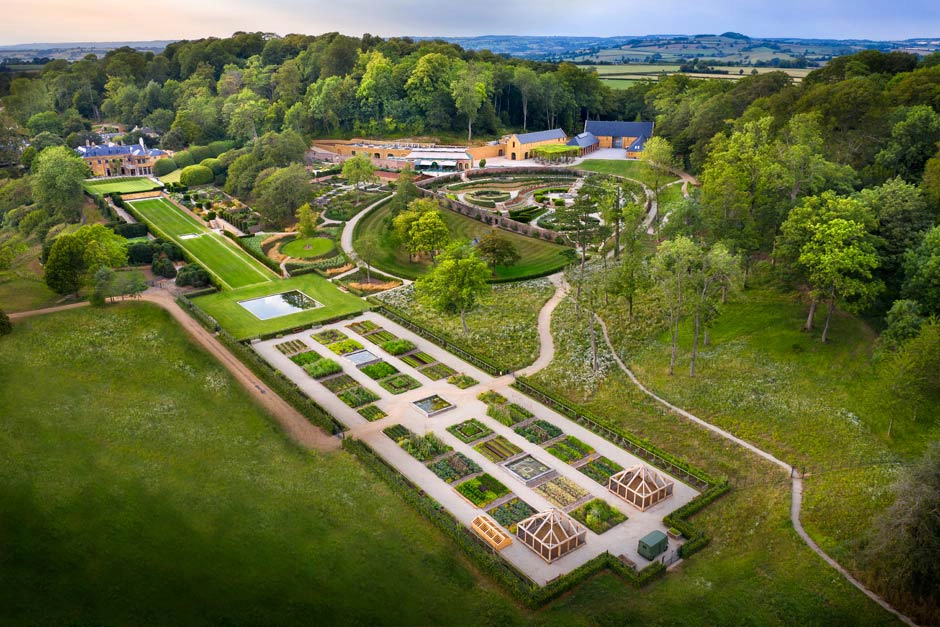
Gardens at The Newt in Somerset. Photo courtesy of The Newt in Somerset.
Rousham Gardens in Oxfordshire. Image © Rousham Gardens.
1. The Newt in Somerset – for wow-factor and all-day adventure
When I’m craving spectacle rather than serenity, I head for The Newt in Somerset. This extraordinary estate is part immersive experience, part horticultural showcase: a Romano‑British villa, a Renaissance‑style grotto, Victorian winter gardens, a Japanese garden and the unforgettable treetop walkway that carries you above the canopy.
Water features – rills, cascades and mischievous frog fountains – add energy and playfulness. For plant‑lovers seeking ideas, the colour‑themed garden sections offer endless inspiration. Call it Disney if you like but for me it’s pure delight.
2. Rousham Gardens, Oxfordshire – for quiet beauty and peace
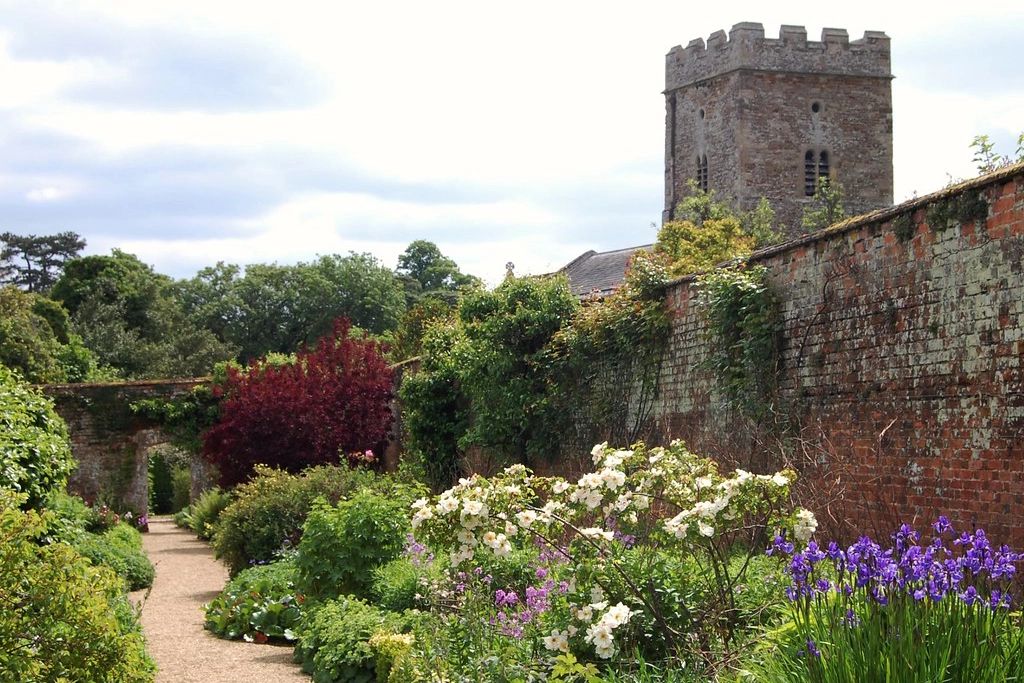
When I need refuge rather than excitement, Rousham Gardens is where I go. In winter, evergreen underplanting – box, yew and laurel – offers a welcome antidote to grey Oxfordshire skies. In summer, ancient beech and oak trees cast dappled shade across the meanders of the River Cherwell.
If you want true tranquility, find the stone loggia perched on the hillside or follow the cascades down to the woodland rill. Understated, dignified and quintessentially English.
Gardens at The Newt in Somerset. Photo courtesy of The Newt in Somerset.
Rousham Gardens in Oxfordshire. Image © Rousham Gardens.
1. The Newt in Somerset – for wow-factor and all-day adventure
When I’m craving spectacle rather than serenity, I head for The Newt in Somerset. This extraordinary estate is part immersive experience, part horticultural showcase: a Romano‑British villa, a Renaissance‑style grotto, Victorian winter gardens, a Japanese garden and the unforgettable treetop walkway that carries you above the canopy.
Water features – rills, cascades and mischievous frog fountains – add energy and playfulness. For plant‑lovers seeking ideas, the colour‑themed garden sections offer endless inspiration. Call it Disney if you like but for me it’s pure delight.
2. Rousham Gardens, Oxfordshire – for quiet beauty and peace
When I need refuge rather than excitement, Rousham Gardens is where I go. In winter, evergreen underplanting – box, yew and laurel – offers a welcome antidote to grey Oxfordshire skies. In summer, ancient beech and oak trees cast dappled shade across the meanders of the River Cherwell.
If you want true tranquility, find the stone loggia perched on the hillside or follow the cascades down to the woodland rill. Understated, dignified and quintessentially English.

Great Dixter House & Gardens in East Sussex. Image © Great Dixter Charitable Trust.
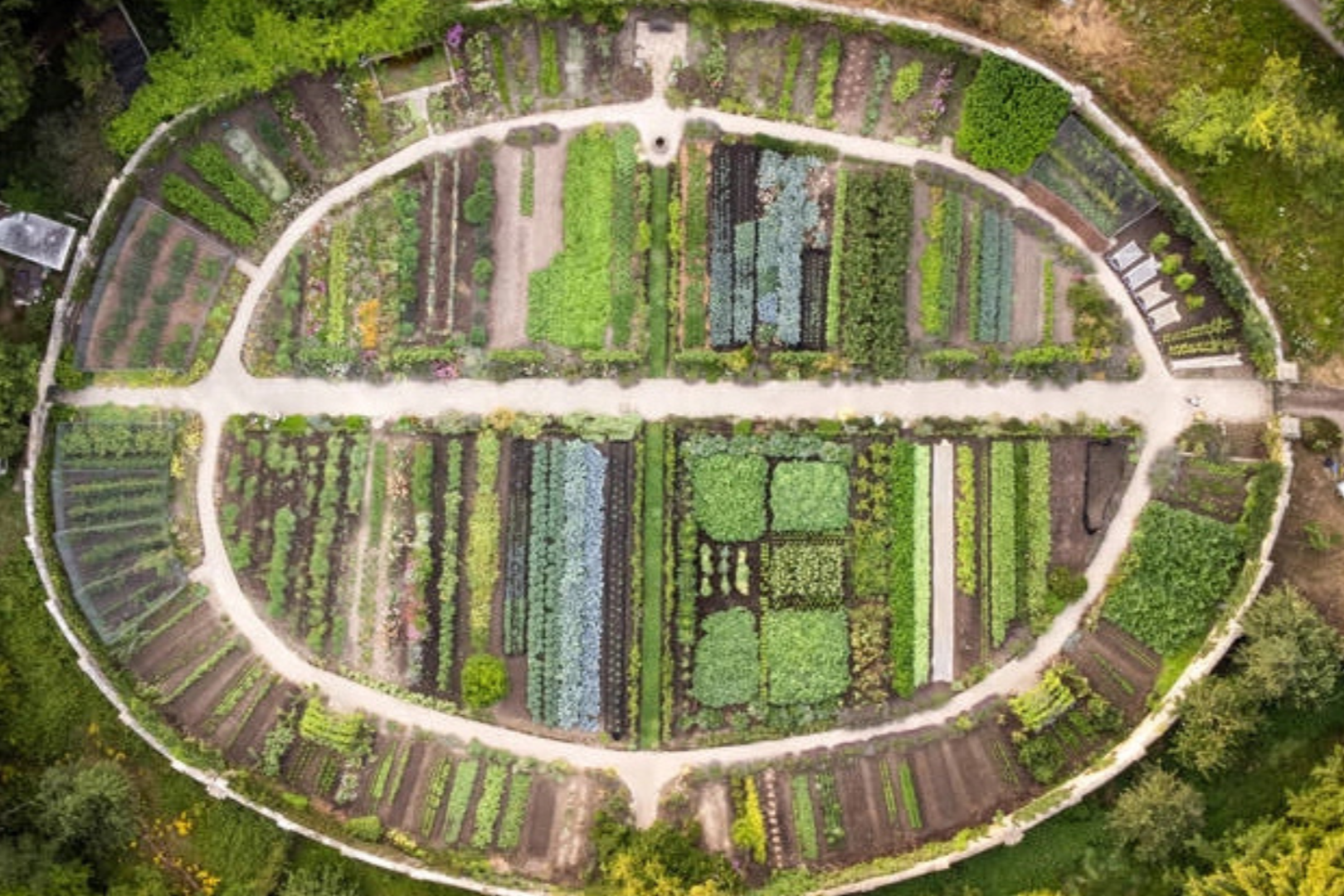
Gravetye Manor’s Victorian walled kitchen garden in West Sussex. Image © The Times.
3. Great Dixter House & Gardens, East Sussex – for plant-lovers and creative gardening
Some gardens are about plants and Great Dixter is the plant‑lover’s pilgrimage site. In high summer, the borders overflow into the paths, creating joyful anarchy – an explosion of colour, texture and form. Beneath the exuberance is meticulous design, allowing the “wild” feel to work.
Great Dixter continually rewrites the rules of what grows with what. I always come home buzzing with ideas.
4. Gravetye Manor, West Sussex – for wild gardening and kitchen-garden magic
The former home of William Robinson, champion of wild gardening, Gravetye Manor embraces his philosophy beautifully. Today it’s a hotel and celebrated restaurant but the gardens remain experimental, naturalistic and quietly radical.
The Victorian oval walled kitchen garden is a showstopper. Walking through its wrought‑iron gates feels like stepping into another world. You’ll find yourself guessing what’s growing in every row as you wander the curving paths.
For garden and food lovers alike, it’s irresistible.
Great Dixter House & Gardens in East Sussex. Image © Great Dixter Charitable Trust.
Gravetye Manor’s Victorian walled kitchen garden in West Sussex. Image © The Times.
3. Great Dixter House & Gardens, East Sussex – for plant-lovers and creative gardening
Some gardens are about plants and Great Dixter is the plant‑lover’s pilgrimage site. In high summer, the borders overflow into the paths, creating joyful anarchy – an explosion of colour, texture and form. Beneath the exuberance is meticulous design, allowing the “wild” feel to work.
Great Dixter continually rewrites the rules of what grows with what. I always come home buzzing with ideas.
4. Gravetye Manor, West Sussex – for wild gardening and kitchen-garden magic
The former home of William Robinson, champion of wild gardening, Gravetye Manor embraces his philosophy beautifully. Today it’s a hotel and celebrated restaurant but the gardens remain experimental, naturalistic and quietly radical.
The Victorian oval walled kitchen garden is a showstopper. Walking through its wrought‑iron gates feels like stepping into another world. You’ll find yourself guessing what’s growing in every row as you wander the curving paths.
For garden and food lovers alike, it’s irresistible.
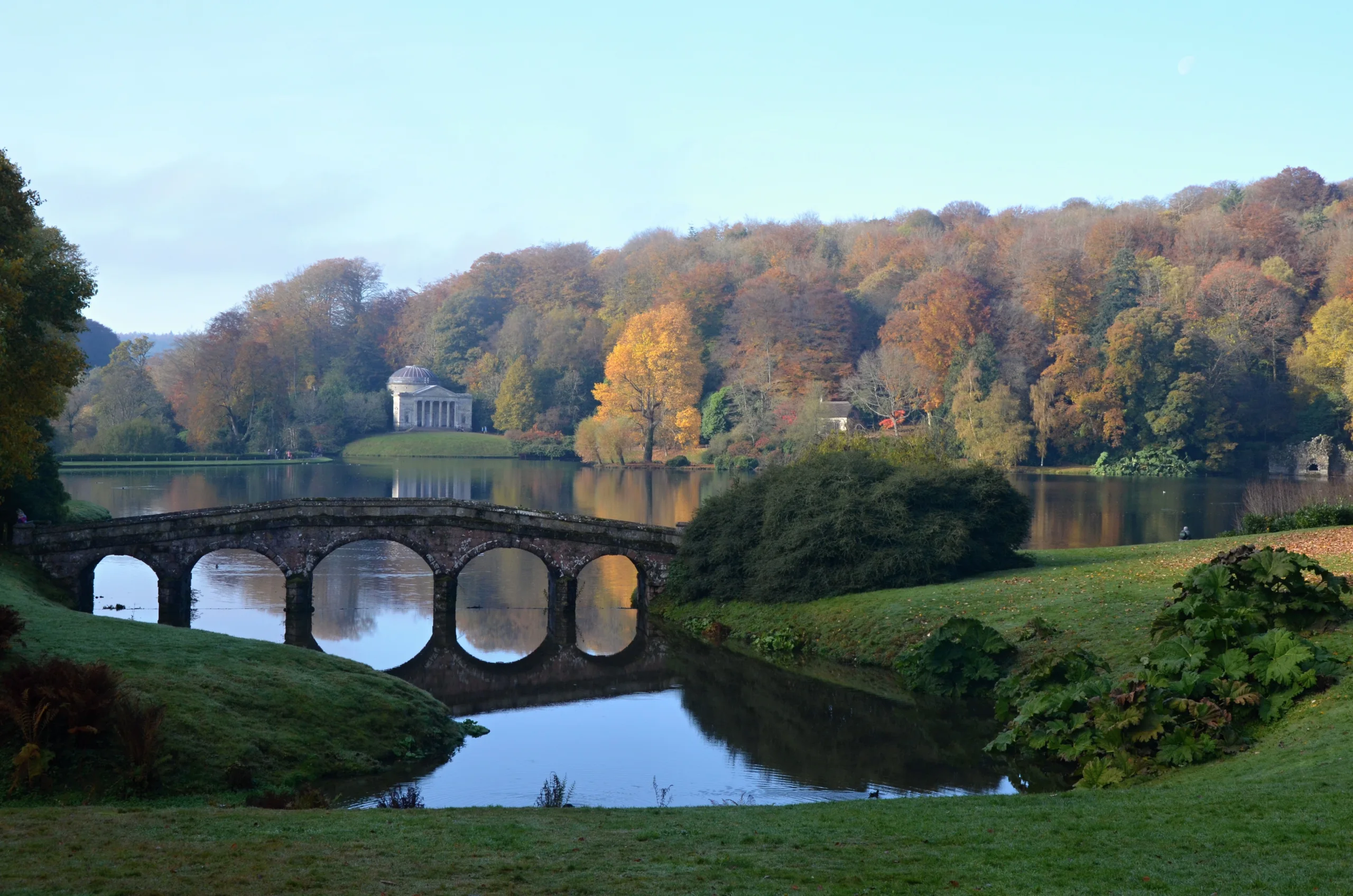
Stourhead Landscape Garden in Wiltshire.
Autumn colours at Batsford Arboretum in the Cotswolds. Image © Batsford Arboretum & Garden Centre.
5. Stourhead, Wiltshire – for visitors expecting “classic English landscape gardens”
When I’m hosting overseas visitors, I often bring them to Stourhead – a masterpiece of the English landscape‑garden tradition. Although not actually designed by Capability Brown, it has everything people expect:
- a serpentine lake
- an elegant stone bridge
- grottoes perfect for a splash of drama
- temples placed for perfect long vistas
- and, of course, tea and cake at the café
This is English garden heritage at its most theatrical.
6. Batsford Arboretum, Gloucestershire – for autumn colour
Come October, I reserve a weekend day for Batsford Arboretum. It’s closer than Westonbirt but every bit as impressive. The maples blaze in reds, oranges and golds; rare magnolia species sport huge leaves that demand attention; and the oaks provide timeless structure.
If you love trees, this is the place to watch autumn take hold.
Stourhead Landscape Garden in Wiltshire.
Autumn colours at Batsford Arboretum in the Cotswolds. Image © Batsford Arboretum & Garden Centre.
5. Stourhead, Wiltshire – for visitors expecting “classic English landscape gardens”
When I’m hosting overseas visitors, I often bring them to Stourhead – a masterpiece of the English landscape‑garden tradition. Although not actually designed by Capability Brown, it has everything people expect:
- a serpentine lake
- an elegant stone bridge
- grottoes perfect for a splash of drama
- temples placed for perfect long vistas
- and, of course, tea and cake at the café
This is English garden heritage at its most theatrical.
6. Batsford Arboretum, Gloucestershire – for autumn colour
Come October, I reserve a weekend day for Batsford Arboretum. It’s closer than Westonbirt but every bit as impressive. The maples blaze in reds, oranges and golds; rare magnolia species sport huge leaves that demand attention; and the oaks provide timeless structure.
If you love trees, this is the place to watch autumn take hold.
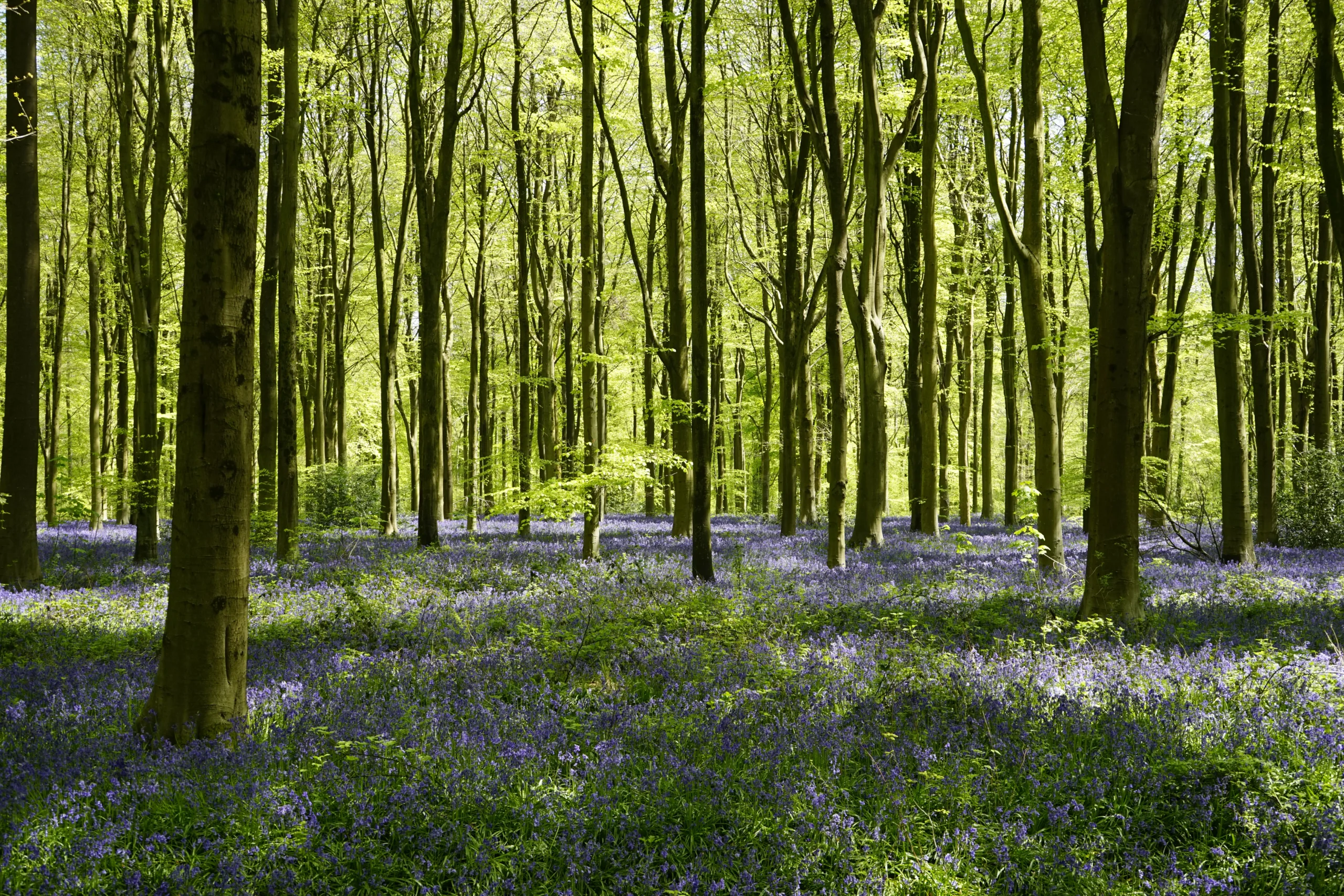
Bluebell woodland at Cowleaze Wood in the Chilterns. Image © Forestry England.

Wildflower meadow at Clattinger Farm near Cirencester. Photo courtesy of Wiltshire Wildlife Trust.
7. Cowleaze Wood, Chilterns – for bluebell season
Nature itself provides the greatest garden of all. One of the best examples is Cowleaze Wood, near the M40 at Lewknor, where every April and May the ground becomes a shimmering carpet of English bluebells beneath fresh spring beech foliage.
It’s unforgettable and entirely free.
8. Clattinger Farm, Wiltshire – for wildflower meadows
England has lost 97% of its wildflower meadows, which makes Clattinger Farm near Cirencester especially precious. Protected as part of the Coronation Meadows project, it now acts as a donor site to help regenerate meadows nationwide.
Timing matters. After hay‑cutting, it’s quiet; but visit in late April and you’ll find one of nature’s great spectacles – thousands of snake’s head fritillaries nodding in the sunlight, insects humming all around.
Bluebell woodland at Cowleaze Wood in the Chilterns. Image © Forestry England.
Wildflower meadow at Clattinger Farm near Cirencester. Photo courtesy of Wiltshire Wildlife Trust.
7. Cowleaze Wood, Chilterns – for bluebell season
Nature itself provides the greatest garden of all. One of the best examples is Cowleaze Wood, near the M40 at Lewknor, where every April and May the ground becomes a shimmering carpet of English bluebells beneath fresh spring beech foliage.
It’s unforgettable and entirely free.
8. Clattinger Farm, Wiltshire – for wildflower meadows
England has lost 97% of its wildflower meadows, which makes Clattinger Farm near Cirencester especially precious. Protected as part of the Coronation Meadows project, it now acts as a donor site to help regenerate meadows nationwide.
Timing matters. After hay‑cutting, it’s quiet; but visit in late April and you’ll find one of nature’s great spectacles – thousands of snake’s head fritillaries nodding in the sunlight, insects humming all around.
My desert island garden?
Choosing eight was difficult enough but picking my one “desert island garden”?
It would have to be Great Dixter for its energy, inventiveness and joyful disregard for convention.
And if I’m allowed a book and a luxury, I’ll take The Gardens of Arne Maynard and a National Trust café, because even on a desert island, tea and cake are essential.
My desert island garden?
Choosing eight was difficult enough but picking my one “desert island garden”?
It would have to be Great Dixter for its energy, inventiveness and joyful disregard for convention.
And if I’m allowed a book and a luxury, I’ll take The Gardens of Arne Maynard and a National Trust café, because even on a desert island, tea and cake are essential.